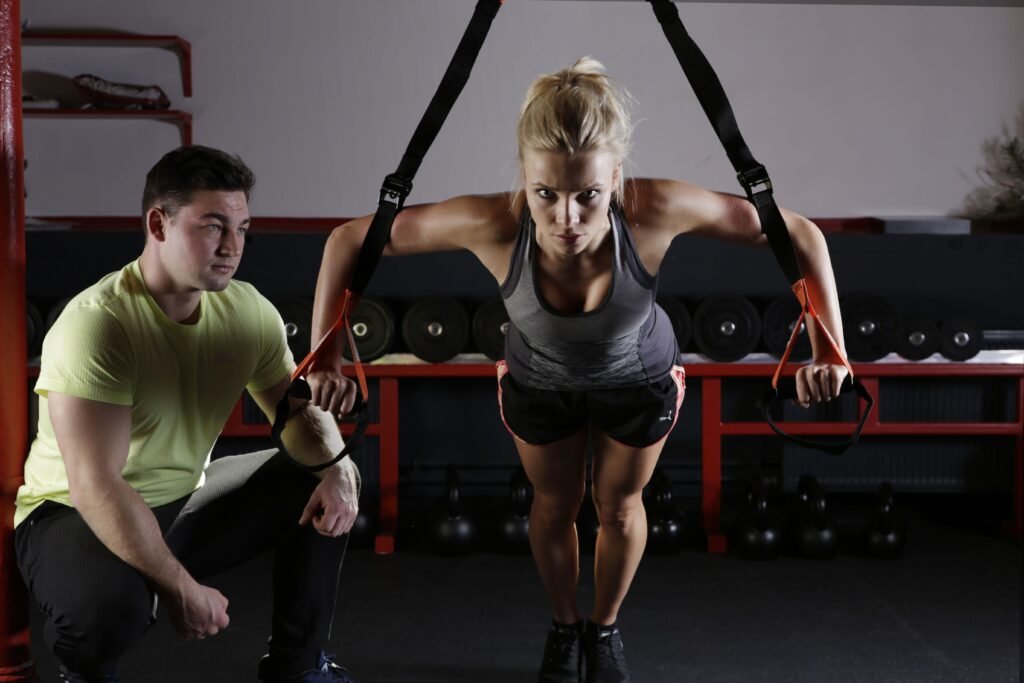
What Happened When Everyday People Started Training Like Athletes Instead of Trying to Shrink
For decades, fitness culture told women that the goal was to take up less space. Then something shifted, and the transformation has been far more than physical.
The old script
The fitness industry spent most of the 20th century selling women a singular proposition: shrink. Aerobics classes were designed to ‘tone without bulking.’ Diet programmes were built around deficit and denial. Gym marketing positioned women’s bodies as projects requiring constant maintenance, with the implicit threat that failing to engage was a moral failing. Even the language was diminutive: trim, slim, lean, light.
The results were predictable. Exercise became associated not with capability or pleasure but with punishment and compensation. Women who ate too much went to the gym. Women who couldn’t lose weight felt they weren’t trying hard enough. Fitness, for millions of people, was a transaction: calories consumed versus calories burned, endlessly and joylessly negotiated.
The pivot that changed everything
Somewhere around the early 2010s, something began to shift, gradually, and then very quickly. The rise of CrossFit, Olympic weightlifting on social media, and athletes like Serena Williams, Simone Biles, and Allyson Felix reframed what a woman’s body doing difficult things could look like. The phrase ‘strong is the new skinny’ was, as critics correctly noted, still an aesthetic proposition, but it cracked open a door.
What walked through that door was performance. Women began lifting barbells. They set personal records. They ran marathons and ultra-distances. They hired coaches. They tracked progressive overload. They talked about protein and periodisation. They stopped asking how to burn the most calories and started asking how to get stronger. And in doing so, they adopted the framework that professional athletes had always used, one centred on what the body could do, rather than what it looked like.
“When women began measuring progress in kilograms lifted rather than kilograms lost, the entire relationship between women and movement began to change.”
What training like an athlete actually means
For non-professional athletes, training like one does not mean training six hours a day. It means adopting a performance mindset: setting measurable, capability-based goals; structuring exercise around progressive overload rather than arbitrary calorie burn; treating nutrition as fuel rather than a moral ledger; and prioritising recovery (sleep, rest days, and deload weeks) as essential components of the process rather than signs of weakness.
This reframe has profound implications. When exercise becomes about gaining capacity rather than losing mass, the relationship with food shifts too. Strength training creates a concrete need for adequate protein and carbohydrates, the very foods that diet culture had demonised for decades. Athletes eat. The performance mindset gives women explicit permission to do so, rooted not in indulgence but in function.
The psychological transformation
Physical therapists and sports psychologists who work with recreational female athletes describe a pattern they see repeatedly: women who begin training for performance (whether that means a 5K, a powerlifting total, or simply achieving their first unassisted pull-up) report changes that extend far beyond the gym. Confidence built through physical achievement generalises. Women who learn that their bodies are capable of things they previously considered impossible tend to apply that lesson beyond sport.
Research supports this. A 2021 review in Psychology of Sport and Exercise found that resistance training interventions in women significantly improved not just physical self-concept but general self-efficacy, the belief in one’s ability to accomplish goals in other domains. The barbell, in this sense, is not merely a fitness tool. It is a renegotiation of what women believe themselves capable of.
The class dimension we need to talk about
The performance-mindset revolution has not been evenly distributed. Elite personal training, sports nutrition consultation, high-quality gym equipment, and the time required to train consistently remain inaccessible for many women, particularly those working multiple jobs, caring for dependants, or living in areas with poor recreational infrastructure. The women featured in ‘training like an athlete’ narratives on social media tend to be young, affluent, and able-bodied, which narrows the story considerably.
Any genuine celebration of this cultural shift needs to hold this tension honestly. The good news is that the core principle, that exercise should build you up rather than break you down, does not require expensive equipment or unlimited time. It can be practised in a 30-minute bodyweight session, a lunch break walk, or a community leisure centre class. What it requires is a shift in the internal question: not ‘how much did I burn?’ but ‘what can I do that I couldn’t do before?’
Where the conversation goes next
The most encouraging development in performance-based fitness culture is its growing engagement with the full diversity of women’s bodies and life stages. Pregnancy, postpartum recovery, perimenopause, and chronic illness are increasingly entering the mainstream fitness conversation, not as reasons to exercise less, but as reasons to exercise differently and more thoughtfully. A pregnant woman who continues to train is no longer exceptional; she is supported. A 55-year-old who starts powerlifting is no longer remarkable; she is part of a growing movement. What began as a rejection of aesthetic-only fitness culture has, at its best, become something more significant: a collective renegotiation of women’s relationship with their own physicality. It is imperfect, still commercially compromised, and not yet fully inclusive. But the direction is right.