Is Pilates Really One of the Best Workouts Around?
Pilates has gone from rehabilitation rooms and dance studios to a global aesthetic movement. But beneath the leggings and the reformer flatlay, what does the evidence actually say?
From the margins to the mainstream
In the early 2000s, Pilates was the preserve of dancers, physiotherapists’ waiting rooms, and a small cadre of devoted practitioners who spoke of Joseph Pilates with something approaching reverence. Two decades later, it is one of the fastest-growing fitness categories on the planet. The global Pilates market was valued at over £8 billion in 2023 and is projected to nearly double by the end of the decade. Studios have waitlists. Reformer machines, once clinical and forbidding, have become aspirational objects. On TikTok, Pilates content accumulates billions of views.
The demographic driving this surge is largely, though not exclusively, women aged 25 to 45: the same group that has grown increasingly skeptical of high-intensity fitness cultures that emphasised shrinking over strengthening. Whether Pilates has genuinely replaced those cultures or simply repackaged their aesthetics is a question worth taking seriously.
What Pilates actually is, and what it isn’t
Joseph Pilates developed his method in early 20th-century Germany and refined it while interning on the Isle of Man during the First World War, where he worked with injured soldiers and bedridden patients. His system, originally called ‘Contrology’, was built around six principles: concentration, control, centring, flow, precision, and breath. It was never conceived as a weight-loss programme. It was conceived as a method of rehabilitative movement and postural intelligence.
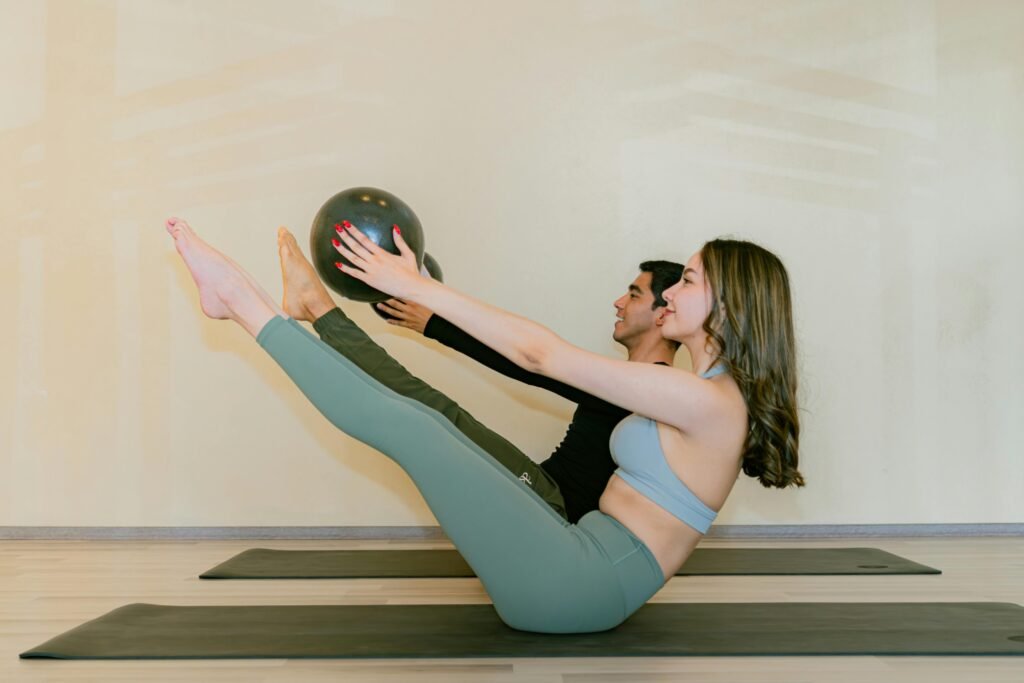
Contemporary Pilates exists on a spectrum. Classical mat Pilates, faithful to Joseph’s original sequences, requires nothing more than a mat and bodyweight. Reformer Pilates, conducted on a spring-resistance machine that creates variable load, has become the dominant studio offering, and can range from a genuinely challenging full-body workout to a gentle, low-impact session suitable for post-surgical rehabilitation. The variation matters, because the evidence base for ‘Pilates’ is not uniform across all its forms.
“Pilates is not a trend that fitness stumbled upon; it is a century-old system that fitness is only now catching up to.”
What the research actually shows
The evidence for Pilates is strongest in specific populations and for specific outcomes. For chronic lower back pain, which affects approximately 80% of adults at some point in their lives, multiple systematic reviews and meta-analyses have found Pilates to be as effective as, and in some studies more effective than, conventional physiotherapy. A 2022 Cochrane review found significant improvements in pain and function for chronic non-specific low back pain following Pilates interventions.
For core strength, balance, and postural control, the evidence is similarly robust. Pilates consistently outperforms many traditional exercise modalities in improving proprioception, the body’s awareness of its own position in space, which makes it particularly valuable for older adults at risk of falls. Studies in postmenopausal women have found Pilates-based interventions improved not only balance and strength, but bone mineral density markers.
The cardiovascular picture is more complicated. Traditional Pilates, particularly mat-based classes at a moderate pace, does not significantly elevate heart rate to the levels required for meaningful aerobic adaptation. If someone replaces all cardiovascular activity with Pilates and nothing else, that is a genuine gap. The newer generation of high-tempo reformer classes, sometimes marketed as ‘Pilates cardio,’ attempts to bridge this divide, but purists argue it sacrifices the precision that makes the method effective.
The aesthetic trap
Here lies one of the more uncomfortable tensions in the contemporary Pilates conversation. Much of its cultural ascent has been driven not by its rehabilitative credentials but by its association with a particular body ideal (lean, long, toned) that is as much a product of genetics, diet, and socioeconomic privilege as it is of Pilates itself. The ‘Pilates body’ as a social media category is almost entirely aesthetic, and bears little resemblance to how Joseph Pilates or his students would have described the practice’s goals.
Instructors and researchers both note the irony: a system developed to rehabilitate the broken bodies of prisoners of war has become, in certain iterations, another vehicle for body idealism. The method itself is innocent of this appropriation. But women, who are disproportionately drawn to Pilates and disproportionately targeted by its marketing, are right to interrogate which version of the practice they are being sold.
Who should be doing Pilates, and how
The honest answer is: almost anyone, but not instead of everything else. For people recovering from injury, managing chronic pain, returning to exercise after pregnancy, or navigating the physical changes of perimenopause, Pilates offers something relatively rare: a form of movement that builds genuine strength while being kind to joints and connective tissue. The emphasis on breath, control, and proprioception is not vanity; it is neuroscience applied to movement.
For the generally healthy adult looking to improve athleticism, Pilates works best as one component of a broader programme. Combine it with two or three sessions of cardiovascular exercise and adequate daily steps, and you have a genuinely well-rounded regime. Treat it as a complete fitness solution, and you will likely find yourself strong and flexible but still lacking in cardiovascular fitness and bone-loading stimulus.
The verdict
Pilates is neither overhyped nor misunderstood; it is both simultaneously. The hype concerns its aesthetic associations, its luxury positioning, and the mythology that it alone can transform a body. The misunderstanding is that its genuine merits (pain relief, postural correction, functional strength, mind-body connection) are often the least visible and least discussed elements of its marketing.
Strip away the reformer flatlay and the curated studio aesthetic, and what remains is a century-old system of disciplined movement that has more peer-reviewed evidence behind it than most fitness trends that have come and gone in the interim. That, at least, is worth taking seriously.