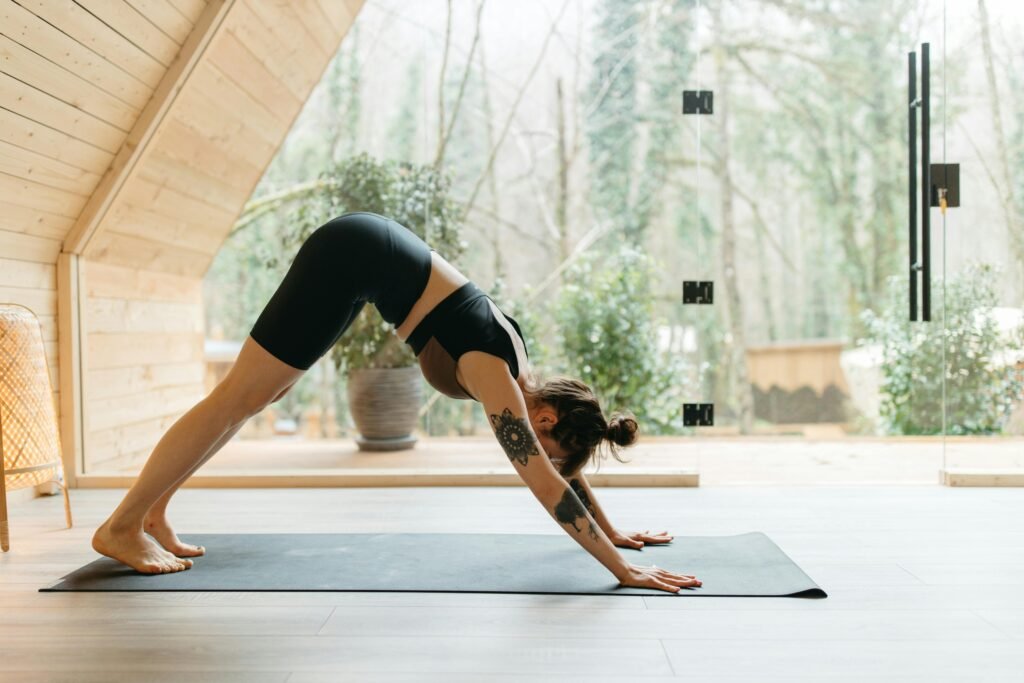
Is the Gym Still the Right Place to Train? The Case for Doing It Differently
The traditional gym model (rows of machines, a mirror for every wall, and an implied competition for the best body in the room) was not designed with most people’s needs in mind. Perhaps it is time to rethink where we go to move.
The gym as default
The commercial gym has been the default site of fitness for so long that questioning it feels almost transgressive. Join a gym. Go to the gym. Leave the gym. The entire architecture of fitness participation (the membership models, the personal training industry, the sportswear market) is built around the assumption that the gym is where fitness happens, and that everywhere else is merely an interlude.
But the gym, as an institution, is a relatively recent invention. It was not until the 1980s (with the aerobics boom, the rise of Nautilus equipment, and the publication of Jane Fonda’s workout) that the commercial fitness centre became a mass-market proposition. Before that, people got fit through work, daily movement, recreational sport, and outdoor labour. The idea that fitness required a dedicated indoor facility staffed by people in polo shirts was, historically speaking, novel.
Who gyms work for, and who they don’t
Gyms work very well for a specific profile: someone who is already reasonably fit, comfortable with exercise equipment, motivated by tracking personal bests, and unintimidated by exercising in the presence of others. This profile describes a minority of the population. For the majority (beginners, those with body image concerns, older adults, people with disabilities or chronic conditions, those with social anxiety, and people who simply find gym environments unpleasant) the commercial gym is, at best, a suboptimal environment and, at worst, an actively discouraging one.
Gym dropout rates reflect this mismatch. Industry data consistently shows that the majority of new gym members stop attending within the first 90 days. January sign-ups peak and attrition follows reliably. The reasons people give for stopping (intimidation, awkwardness, the sense of not fitting in, difficulty knowing what to do) point to a fundamental design problem: gyms are built for people who already know how to use them.
“A gym membership that goes unused is not a personal failure. It may simply be a poor match between environment and individual.”
The outdoor movement
The most significant shift in where people exercise has been toward the outdoors, a trend that began before the pandemic and was dramatically accelerated by it. Park runs, trail running, outdoor swimming, cycling, and simply walking as a deliberate fitness activity all saw sustained increases in participation that, unlike many pandemic-era habits, have not fully reversed. Researchers studying this shift have noted that outdoor exercise consistently reports higher enjoyment ratings, lower perceived exertion at equivalent intensity, and stronger adherence over time compared with indoor exercise.
The natural environment appears to provide specific psychological benefits that indoor settings cannot replicate. ‘Green exercise’ research, led by groups including the University of Exeter’s European Centre for Environment and Human Health, has found that even brief exposure to natural environments during exercise amplifies mood improvements, reduces cortisol, and increases feelings of revitalisation. These are not trivial benefits. In a context where exercise adherence is the central public health challenge, anything that makes people more likely to keep moving deserves serious attention.
Home training: the great leveller
The pandemic forced a natural experiment in home exercise participation at an unprecedented scale, and the results were not uniformly negative. Millions of people discovered that a meaningful, progressive training programme could be sustained in a living room or garden with minimal or no equipment. Online fitness platforms grew exponentially and have maintained elevated subscription numbers. For those who had previously found gyms inaccessible (whether due to cost, geography, transport, caring responsibilities, or discomfort) home training offered genuine inclusion.
The evidence on home versus gym training outcomes is more nuanced than gym advocates or home-training influencers typically acknowledge. For cardiovascular fitness, there is essentially no difference; running is running, whether a treadmill or a park path. For resistance training, the gym’s access to heavier loads and variety of equipment does matter, particularly for advanced trainees seeking maximal strength gains. For beginners, however, progressive bodyweight training can drive significant strength improvements for many months before equipment becomes a limiting factor.
Community as infrastructure
Perhaps the most underrated alternative to the commercial gym is community-based sport. Sports clubs (running clubs, football teams, swimming groups, martial arts clubs, cycling clubs) provide not just exercise but social connection, accountability, and identity. The social dimension of physical activity is consistently underweighted in fitness culture, which tends to frame exercise as a solitary self-improvement project. But research on long-term exercise adherence consistently finds that social participation is among the strongest predictors of sustained activity, more so than motivation, knowledge, or equipment access.
The economics are often more accessible, too. Many community sports clubs charge nominal membership fees, community leisure centres offer subsidised memberships, and outdoor fitness infrastructure (exercise trails, outdoor gym equipment in parks) has expanded significantly in urban areas. The argument that fitness requires a premium environment is, largely, a commercial one.
Making the choice that fits
None of this is an argument that gyms are bad. For many people, they are excellent. For access to heavy weights, climate-controlled training environments, structured classes, and qualified professional guidance, commercial gyms remain highly valuable. The argument is simply that they are not the only option, and not necessarily the best option for the majority of people who currently avoid exercise altogether.
If the goal (as public health professionals, governments, and exercise scientists broadly agree) is to increase the proportion of the population moving regularly, then the diversity of environments in which that movement can happen is a strategic asset. The gym is one tool. Walking is another. Community sport is another. Home training is another. And the most effective exercise, as the old saying goes, is the one you will actually do.