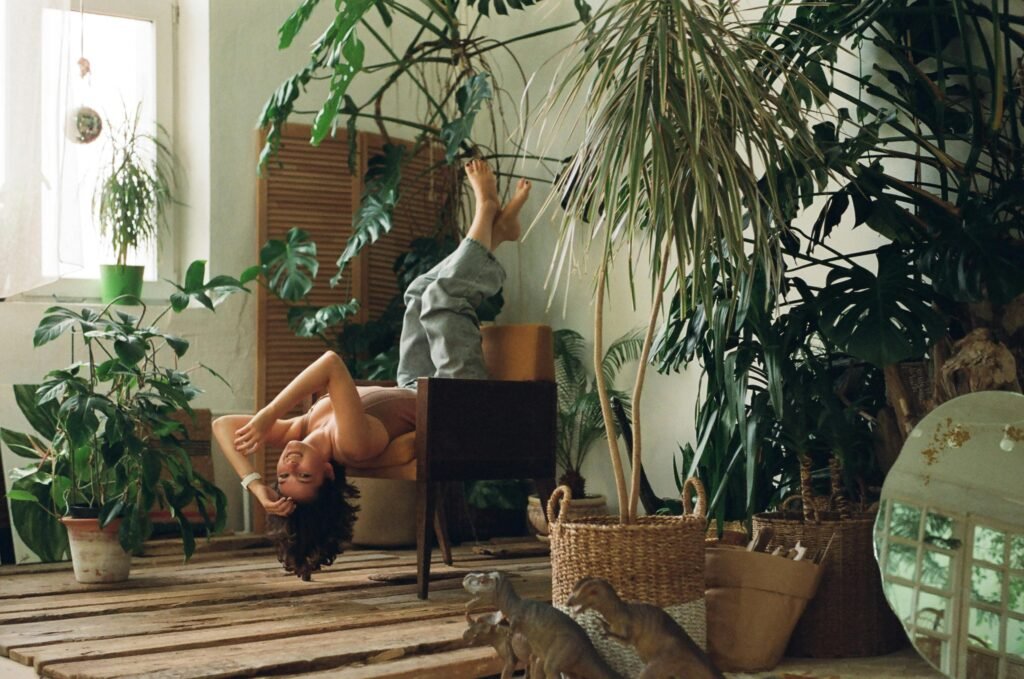
Why Biophilic Design Has Moved From Trend to Necessity
It began as an architectural philosophy, became a middle-class aesthetic statement, and is now backed by enough science to have entered the mainstream conversation about public health. Biophilic design, the integration of nature into built environments, is no longer optional.
When the term ‘biophilic design’ first entered mainstream interior design discourse in the early 2010s, it arrived with the inevitable weight of lifestyle branding: monstera plants in Scandinavian ceramics, exposed timber beams in East London offices, moss walls in hotel lobbies. It looked, to the sceptical eye, like another aesthetic trend dressed in scientific clothes, the kind of thing that would cycle out of fashion as quickly as the copper tap fittings and exposed Edison bulbs it arrived alongside.
A decade on, biophilic design has not cycled out. It has deepened, expanded and accumulated a body of evidence that is increasingly difficult to dismiss or reduce to aesthetics. What began as an architectural philosophy derived from the biologist E.O. Wilson’s concept of ‘biophilia’, the innate human affinity for other living systems, has become one of the most rigorously researched areas in environmental psychology, public health and workplace design.
What the Science Actually Says
The evidence base for biophilic design spans multiple disciplines and decades. A landmark study by Roger Ulrich, published in the journal Science in 1984, found that hospital patients recovering from surgery in rooms with a view of trees had shorter post-operative stays, required fewer pain medications and were assessed by nursing staff as having better recoveries than equivalent patients whose windows faced a brick wall. The study was methodologically rigorous and its findings have been replicated, extended and built upon in the forty years since.
More recent research has examined the mechanisms through which nature exposure affects human physiology. Exposure to natural elements (plants, water, natural light, natural materials, views of green space) consistently produces measurable reductions in cortisol, lower heart rate and blood pressure, faster recovery from cognitive fatigue, and improved mood and attention. These effects have been found in controlled laboratory settings, in workplaces, in healthcare environments, and in domestic spaces.
A 2019 study published in the journal Frontiers in Psychology found that the presence of indoor plants in domestic environments was associated with reduced psychological stress and improved subjective wellbeing, even when other variables including income, square footage and natural light were controlled for. The effect was not large, but it was robust and consistent: plants, in a measurable sense, make people feel better.
“We did not evolve to live in sealed boxes of concrete and glass. Our nervous systems are still calibrated for environments that include living things. We ignore that at our peril.”, Professor Stephen Kellert
Beyond the Houseplant
Biophilic design in its fullest expression goes considerably further than pot plants and cut flowers. The field identifies multiple ‘patterns of biophilic design’, ways in which the qualities of natural environments can be incorporated into built spaces, that range from the literal to the conceptual. They include direct nature (plants, water, animals, natural light); natural analogues (organic forms, natural materials, nature-inspired patterns and textures); and nature of the space (prospect, refuge, mystery, and the sense of being connected to larger systems).
The last category is perhaps the most interesting from a domestic design perspective. Research on the concepts of prospect and refuge, the human preference for spaces that offer a view of the wider environment (prospect) while also providing a sense of shelter and enclosure (refuge), has informed everything from furniture placement to building orientation. A sofa positioned with its back to a wall and its face toward a window is not merely comfortable: it is, in biophilic terms, providing the same psychological conditions that our ancestors sought in a position on the edge of a forest clearing.
Natural materials (timber, stone, linen, leather, clay) function as nature analogues: their textures and imperfections carry sensory information that manufactured surfaces, however beautiful, do not. Research on tactile experience in interior spaces consistently finds that natural materials are perceived as warmer, more comfortable and more calming than synthetic equivalents, even in blind testing.
The Domestic Dimension
For homeowners, biophilic design offers something unusual: a framework for making interior decisions that is rooted in biology rather than trend. It does not mandate a particular aesthetic. A Victorian terrace and a contemporary apartment can both be made more biophilic through the same principles: maximise access to natural light; introduce living plants, particularly species that support air quality; choose natural materials where possible; create views of green space or, where that is not possible, incorporate images of natural environments; allow natural sounds where they are pleasant; and design spaces that provide both openness and enclosure.
The cost of implementation ranges from negligible (moving a piece of furniture to improve a window view) to significant (installing a living green wall or replacing all synthetic surfaces with natural ones). But the research consistently suggests that even small, low-cost biophilic interventions (a well-placed plant, a natural fibre rug, the replacement of a synthetic candle with beeswax) produce measurable wellbeing effects.
For renters, many of whom have limited control over their physical environment, biophilic principles are particularly accessible: plants, textiles and natural materials are all portable and require no landlord permission. In a housing context that is increasingly constrained in every other dimension, the ability to bring something living into a space, and to feel its effect, is not a small thing.