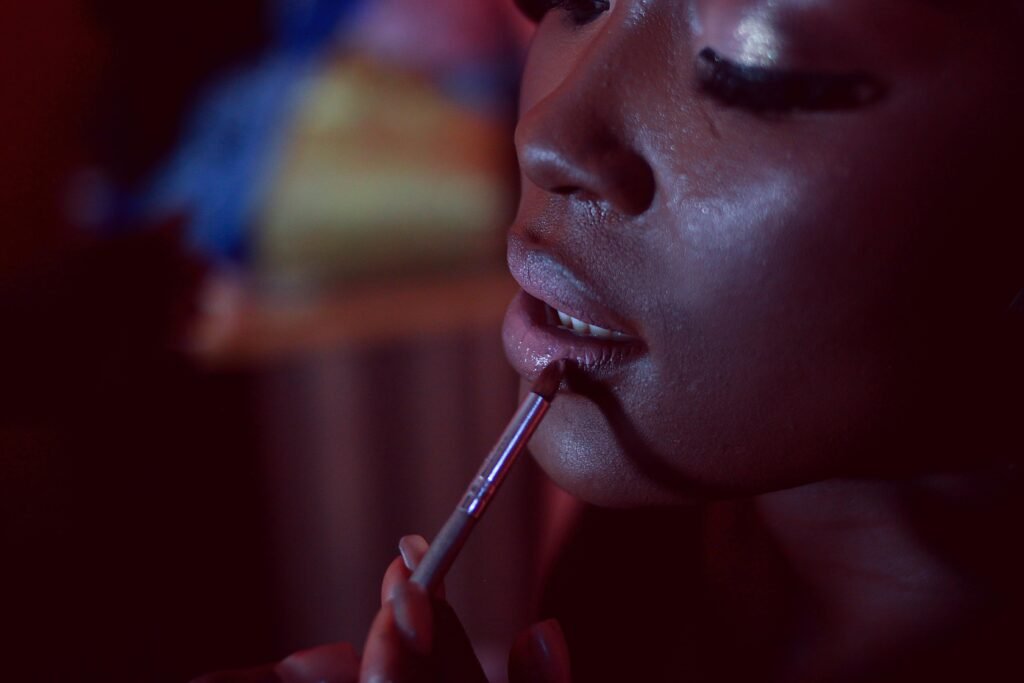
The Bold Lip: A Cultural and Practical Guide
Throughout history, the bold lip has been read as defiance, glamour, grief, and joy, often all at once. Understanding why it endures is as useful as knowing how to wear it.
A Brief History of the Powerful Lip
The association between red lips and power is ancient. In ancient Egypt, both men and women used lip colour made from crushed carmine beetles and henna. In Elizabethan England, a bold lip was the mark of wealth and rank. Queen Elizabeth I’s signature scarlet mouth was deliberately political, a visual assertion of authority at a time when her right to rule was contested.
Through the 20th century, the bold lip repeatedly emerged in response to adversity. During both World Wars, when cosmetics were officially encouraged by governments as morale-maintaining tools, lipstick production was one of the few beauty categories protected from rationing. The connection between a painted lip and psychological resilience, rooted in the act of presenting a composed face to the world during chaos, is remarkably consistent across eras.
“During the Second World War, governments on both sides of the Atlantic actively encouraged women to wear lipstick. The bold lip was not vanity; it was a form of public morale.”
Why the Bold Lip Keeps Coming Back
Fashion is cyclical, but the bold lip’s returns have tended to coincide with specific cultural moments: periods of economic anxiety, political upheaval, or collective reassessment of identity. The return of the deep plum and burgundy lip in the early 2020s, following years of lip gloss minimalism, tracked alongside broader cultural conversations about self-expression, authenticity, and the rejection of the clean-girl aesthetic’s constraints.
There is also a practical dimension. A bold lip is, in many ways, the easiest dramatic statement a person can make. It requires no particularly advanced skill, no extensive product collection, and can transform an otherwise bare or minimal face into something complete and intentional. It is, as makeup artists frequently observe, the most efficient glamour.
Choosing Your Bold Lip: Beyond Red
Red is the archetype, but the vocabulary of the bold lip is considerably wider. Burgundy and oxblood tones work beautifully on medium to deeper skin tones, where the contrast between lip colour and complexion creates sophistication rather than shock. Coral and tangerine are the warm-weather bold lip: energetic rather than dramatic. Berry and plum tones offer the deepest impact on fair to medium complexions. Hot pink is the bold lip of maximum exuberance, technically the hardest to pull off, but with the highest return when it works.
Undertone plays a significant role here. Blue-based reds and berries suit cool undertones. Orange-based reds and corals suit warm undertones. If a bold lip shade has historically made you look sallow or washed out, it is almost certainly an undertone mismatch rather than the intensity itself that is the problem.
Application: Precision and Longevity
A bold lip fails or succeeds at its edges. If the line between lip colour and skin is clean and intentional, the look reads as deliberate. If it bleeds or blurs, it undermines the whole effect. A lip liner in the same tone as or slightly deeper than your lipstick is not optional; it is structural.
Apply liner first, starting from the cupid’s bow and working outward to the corners. Then fill in the entire lip with liner before applying lipstick on top. This technique provides a base that holds the lipstick longer and prevents the colour from migrating throughout the day.
For maximum longevity: apply one coat of lipstick, blot with a single ply of tissue paper, apply a second coat. The blotting removes excess product and the oils that cause fading, while the second coat restores colour. Avoid applying balm or gloss underneath a bold lip intended to last.
“The liner is not a final outline; it is a scaffold. Fill in the entire lip with it, and your lipstick will last twice as long.”
The Rest of the Face: The Balance Question
The convention that a bold lip requires a bare eye is a useful starting point but not an absolute rule. The principle behind it is simply contrast management: the eye should not compete with the mouth for attention. A soft smoky eye in neutral tones, such as taupe or warm brown, can co-exist with a bold lip if the tones are harmonious and the intensity of the eye is kept below that of the lip.
What the convention does accurately advise against is both a strong eye and a strong lip simultaneously. The two elements cancel each other’s drama rather than amplifying it. Decide which you want to be the focal point and let the other recede. The bold lip is most powerful when the rest of the face gives it room to speak.
| Bold Lip Essentials |
|---|
| Match lip shade to your undertone, not just your complexion, to avoid the washed-out effect |
| Line and fill the entire lip with liner before applying lipstick: this is your longevity foundation |
| Apply, blot, then apply again for colour that lasts through meals and drinks |
| Keep the eye minimal when the lip is bold: decide on your focal point and let the other zone recede |
| Undertone mismatch, not colour intensity, is the reason most bold lips fail to flatter |