Every Eyeliner Technique Explained (And When to Use Each)
Eyeliner is one of the most versatile tools in makeup. But most people use only one technique, on autopilot, regardless of the effect they actually want. Here is the full range.
Why Technique Matters More Than Product
The eyeliner category is vast: liquid, gel, pencil, felt-tip, kohl, powder. Each has different properties: precision, smudgeability, lasting power, and intensity. But the more consequential variable is not the product but the placement. Where you draw the line, how thick it is, whether it extends beyond the eye, and where you start and stop. These decisions shape the effect far more than the formula in the tube.
Different techniques alter the apparent size, shape, and lift of the eye. Understanding them gives you the ability to adapt your approach to different occasions, different eye shapes, and different effects.
The Classic Line: Definition Without Drama
The most commonly used technique is a simple line along the upper lash line, as close to the lashes as possible, from inner to outer corner. Kept thin, this simply defines the eye and makes lashes appear denser at the root. Thickened toward the outer corner, it begins to elongate. This is the most universally flattering liner application because it works with any eye shape.
The most frequent error here is starting too far into the inner corner, where the line sits far from the lash root and creates an artificial-looking gap. The inner quarter of the eye is often better left without liner, or lined with a soft pencil or powder rather than a sharp liquid.
“Starting your liner from the middle of the lash line rather than the inner corner is one of the most effective beginner upgrades, and it takes no additional skill.”
Tightlining: The Invisible Enhancement
Tightlining is the technique of applying liner to the waterline, specifically the inner rim of the upper eyelid between the lashes and the eye itself. When done with a dark liner, it creates the appearance of a much denser lash line without any visible line on the skin. Eyes appear more defined and lashes appear thicker, but there is no obvious liner present.
This is the technique that makes people ask whether you are wearing anything on your eyes when you clearly look more awake and defined than usual. It works best with a waterproof pencil or kohl that can withstand moisture. White or nude liner applied to the lower waterline has the opposite effect, reflecting light and making eyes appear wider and brighter.
The Winged Liner: Structure and Technique
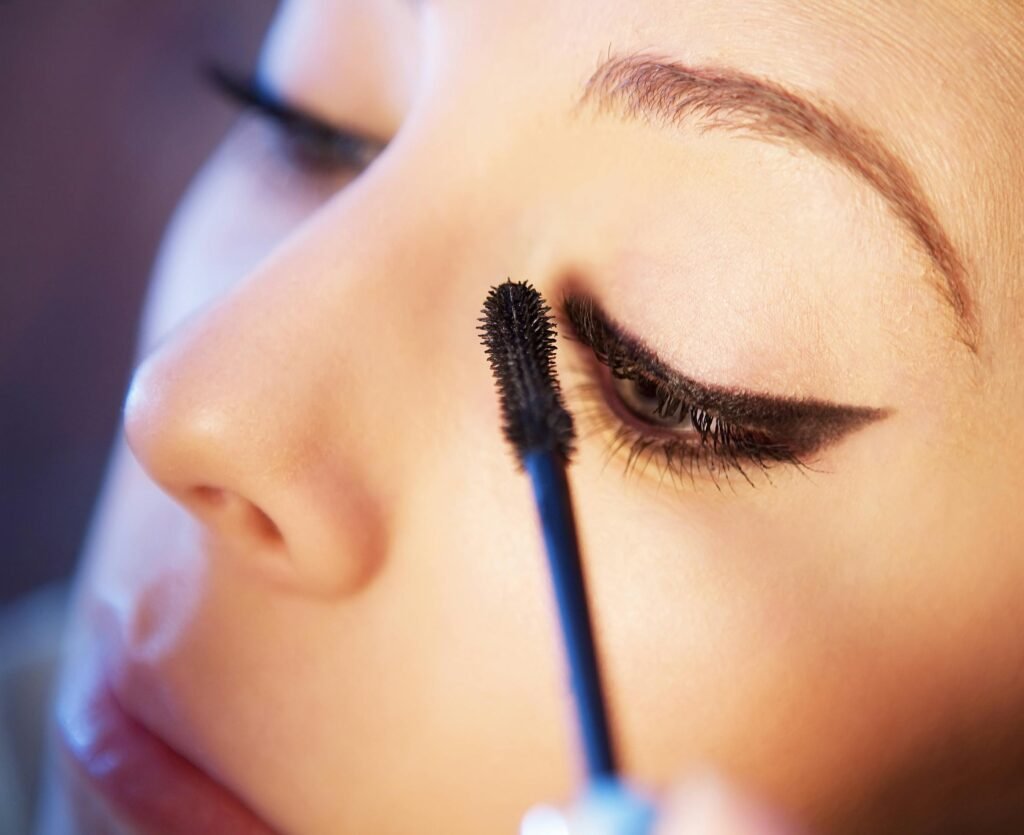
The wing, an extension of the upper liner that flicks upward and outward beyond the outer corner, is the most technically demanding of the everyday liner techniques. The most common difficulty is producing two wings that match each other in angle, length, and thickness.
The most reliable method is to draw the wing first, before the line itself. Draw a short stroke angled from the outer corner toward the tail of the brow; this becomes your guide. Then connect that stroke back to the lash line, fill in the triangle, and draw the line from inner to outer corner to meet it. By doing the wing first, you commit to an angle before the rest of the liner constrains you.
For eye shape guidance: almond and upturned eyes can carry a range of wing styles. Downturned eyes benefit from a wing that angles upward more steeply to counteract the droop. Hooded eyes should generally avoid a wing on the mobile lid, where it will disappear when the eye opens. A wing placed slightly above the natural lid line works better.
Smudged and Smoky Liner: Texture Over Precision
Not all eyeliner techniques aim for a clean edge. Smudged liner, applied with a pencil or kohl and then softened with a brush or a fingertip, creates depth and a deliberately lived-in quality. It is the foundation of the smoky eye, and it is more forgiving of imprecision than any other technique.
Apply a pencil liner along the upper and lower lash lines, then use a small brush or an angled cotton bud to blend the edges inward. The line disappears and is replaced by shadow, deeper at the lash line and fading upward. Adding a matching powder eyeshadow over the top sets the liner and increases intensity.
Graphic Liner: When the Line Becomes Art
The graphic liner trend, encompassing coloured lines, geometric shapes, negative space, and floating liner disconnected from the lash line, belongs to a category where rules about flattery and convention are intentionally suspended. These are looks that prioritise expression over correction.
Technically, graphic liner is best executed with a felt-tip liquid liner, which offers the control needed for clean geometric shapes. A dot of product placed at the outer corner and joined to a floating liner above the crease creates the deconstructed eye look that has appeared on runways and editorial pages in recent seasons.
The principle to carry forward, regardless of technique: liner is a drawing tool, and drawing improves with consistent practice. The liner application that feels effortless by the end of the year is rarely the one that felt easy at the beginning.
| Liner Techniques at a Glance |
|---|
| Classic upper liner: most universally flattering; start from the middle of the lash line, not the inner corner |
| Tightlining: dark pencil on the inner upper rim creates invisible, lash-thickening definition |
| Wing: draw the flick first (angled toward the brow tail), then connect it to the lash line |
| Smudged liner: apply pencil then blend with a brush or cotton bud, the most forgiving technique |
| Graphic liner: felt-tip liquid liner for precision; rules about flattery are optional |