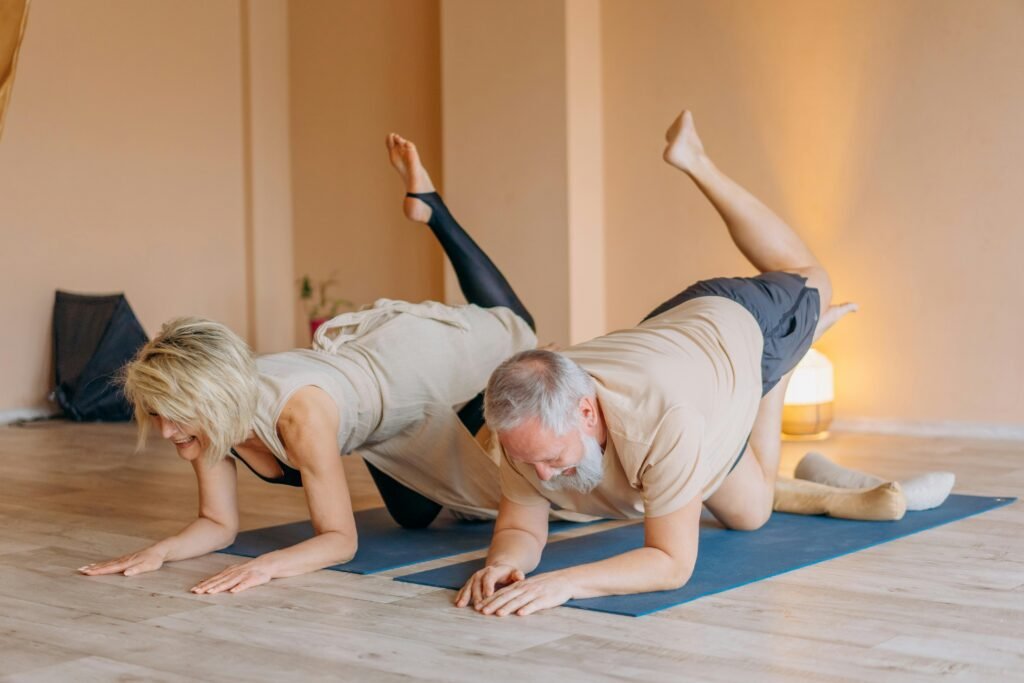
Why Over-50s Are Embracing Strength Training Now
Once invisible in fitness culture, people in their fifties, sixties, and beyond are picking up barbells, setting personal records, and rewriting what it means to age actively. The science behind why they should have started earlier is extraordinary.
Sarcopenia: the silent epidemic
Most people have never heard the word sarcopenia. It refers to the age-related loss of muscle mass and strength, a process that begins in the fourth decade of life and, without intervention, proceeds at a rate of approximately 3–5% per decade before accelerating sharply after 65. By the time a person reaches their eighties, they may have lost 30–40% of the muscle mass they had in their thirties. The consequences are not merely aesthetic. Sarcopenia is directly associated with falls, fractures, metabolic dysfunction, insulin resistance, reduced immune capacity, cognitive decline, and loss of independent living.
It is also almost entirely preventable, and partially reversible, through resistance training. This is one of the most significant findings in gerontology of the last three decades, and one of the most under-communicated to the general public. While the NHS and equivalents globally recommend strength training twice a week for adults of all ages, the proportion of older adults who actually engage in it remains stubbornly low. The barriers are partly cultural (older people, particularly women, have historically been absent from fitness spaces designed for youth) and partly informational. The message that it is not too late, and that it genuinely matters, has not reached far enough.
What resistance training does for the ageing body
The physiological benefits of strength training in older adults are both more numerous and more dramatic than most people expect. Progressive resistance training stimulates muscle protein synthesis even in adults in their eighties and nineties, a finding that overturned the previously held assumption that muscle-building capacity was lost with age. Muscles adapt. They simply adapt more slowly and require more protein to do so.
Beyond muscle, resistance training improves bone mineral density, the critical counter to osteoporosis, which affects one in three women and one in five men over 50 in the UK. It improves glucose metabolism, reducing type 2 diabetes risk. It lowers blood pressure. It reduces fall risk by improving balance, reaction time, and the strength of stabilising muscles around the hip and knee. And, increasingly, it is associated with improved cognitive function: research has found that resistance training is among the most protective lifestyle interventions against cognitive decline, outperforming aerobic exercise alone in several recent trials.
“The best time to start strength training was your thirties. The second best time is right now; whatever age you are.”
The cultural revolution in progress
Something remarkable has happened in fitness culture over the past five years. Older women, long invisible in spaces dominated by youthful aesthetics, have become some of its most vocal and visible participants. Accounts and communities celebrating strength training in midlife and beyond have attracted substantial followings. The term ‘perimenopausal lifting’ has entered the mainstream fitness lexicon. Books, podcasts, and documentaries aimed at active ageing have proliferated.
This is not merely a trend. It reflects a fundamental demographic reality: the UK’s population is ageing, with over-50s now representing a majority of adults and possessing considerable spending power and increasing health awareness. The fitness industry, historically slow to serve this market, is catching up. Premium gym chains have introduced over-50 specific classes. Sports retailers have launched product lines targeting older athletes. The cultural conversation about what ageing actively looks like is broadening.
Menopause and the training imperative
For women in particular, the hormonal changes of perimenopause and menopause create an almost textbook case for resistance training. Declining oestrogen accelerates both bone density loss and the redistribution of body fat toward the abdomen. The metabolic changes of this period (often experienced as unexplained weight gain, fatigue, and metabolic sluggishness) have a physiological basis that is responsive to specific interventions.
Strength training, more than any other form of exercise, appears to mitigate the worst metabolic effects of menopause. It preserves lean mass during a period when the hormonal environment is no longer supporting it. It improves insulin sensitivity. And, in a finding that has gained considerable traction in both clinical and lay circles, it appears to improve vasomotor symptoms including hot flushes, possibly through central thermoregulatory mechanisms. This is not a cure for menopause. But it is meaningful support at a time when many women feel their bodies working against them.
How to start, safely and effectively
Beginning strength training after 50 is neither dangerous nor complicated, but it does require a more deliberate approach than in younger decades. The recovery window is longer, muscles require more time to repair, and the connective tissue adaptations that underpin safe progressive loading happen more gradually. This means starting with lower loads and longer rest periods, progressing more conservatively, and paying particular attention to technique, which both maximises results and reduces injury risk.
Working with a qualified personal trainer or strength coach, at least initially, is a genuinely worthwhile investment for this population. The risk of training incorrectly is not catastrophic, most resistance training is safe even when technique is imperfect, but good coaching accelerates progress and builds the confidence to train independently. For those without access to coaching, reputable online programmes designed specifically for older adults are increasingly available.
The broader message
The over-50s who are picking up barbells are not chasing youth. The most thoughtful among them are doing something rather different: investing in the physical capacity to live fully for the decades ahead. To carry groceries without pain, to climb stairs without caution, to travel and move and participate in life without the creeping attrition of preventable decline. That is not a niche aspiration. It is the aspiration of most people who are paying attention. The science says it is achievable. Fitness culture, slowly, is catching up.