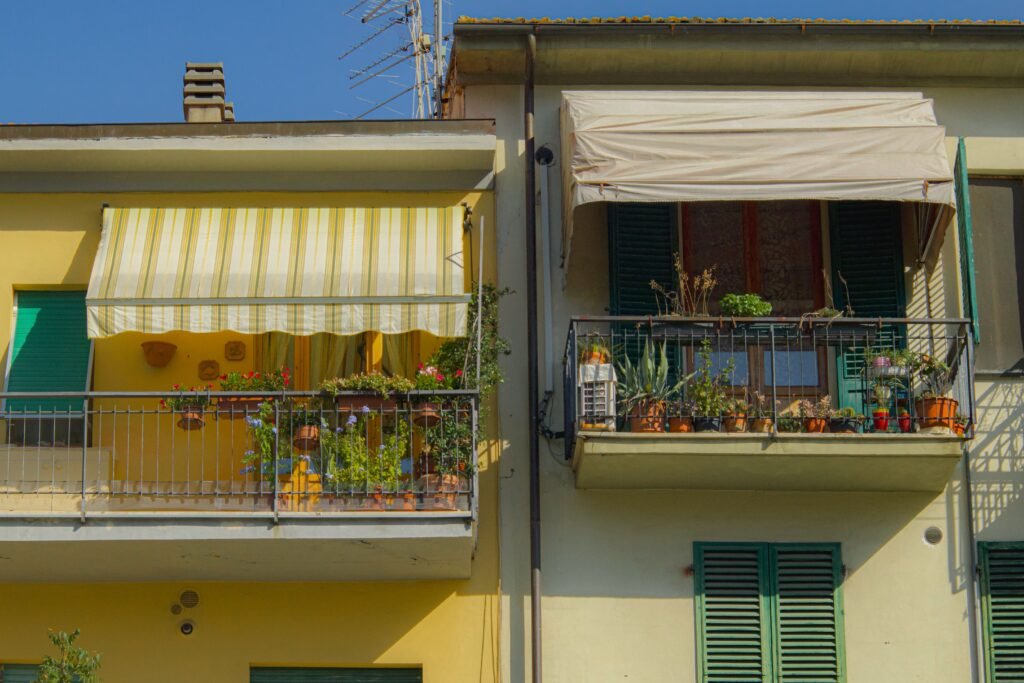
Growing Food in Small Spaces: A Complete Guide
You do not need a large garden to grow your own food. With the right approach to containers, vertical space, and variety selection, even a balcony or small courtyard can produce a meaningful and rewarding harvest.
The Mindset Shift for Small-Space Growing
The instinct when faced with a small space is to think about what cannot be grown. Fruit trees seem too large. Courgettes sprawl. Potatoes need a lot of room. But the more productive question is not what requires the most space, but what produces the most value per square centimetre.
Salad leaves, herbs, chillies, tomatoes (especially compact and cherry varieties), radishes, spring onions, and dwarf beans all produce abundantly in containers. These are also the foods that cost the most per weight in supermarkets, make the greatest difference to a meal when genuinely fresh, and lose quality fastest between harvest and plate. Growing them on a balcony or in a courtyard makes practical as well as horticultural sense.
Containers: Size, Drainage, and Growing Medium
The single most important variable in container growing is drainage. Roots sitting in waterlogged compost will rot regardless of how good the other conditions are. Every container must have drainage holes at the base, and those holes must not be blocked by the surface the container sits on. Raising containers slightly on feet or bricks ensures water can escape freely after each watering.
Larger containers are almost always better than smaller ones. Soil in small pots dries out faster, heats up more in summer, and offers less root space for development. A single large container growing three or four salad varieties will outperform three small pots with one variety each. The minimum useful container depth for most vegetables is twenty to thirty centimetres.
The growing medium should be a peat-free, multi-purpose compost rather than garden soil, which compacts in pots and drains poorly. For longer-term plantings such as herbs and fruiting plants, add slow-release fertiliser at planting time or refresh the top layer of compost each spring to replace the nutrients that have been used or washed through.
Vertical Growing: The Most Underused Resource
The vertical dimension is consistently the most underused resource in a small garden. Walls, fences, railings, and trellises can all support growing plants, effectively multiplying the productive area without increasing the footprint at all.
Climbing beans, cucumbers, and certain squash varieties grow vertically with minimal support. Strawberries perform well in hanging baskets or wall-mounted pocket planters, making productive use of space that would otherwise be unused. A simple system of tiered shelving or staging holds multiple containers at different heights, allowing significantly more plants within the same floor area.
“The vertical dimension is the most underused resource in a small garden. Walls, fences, and railings can effectively multiply productive area without increasing the footprint by a single square metre.”
Variety Selection: Where Small-Space Success Begins
Variety selection makes a profound difference in small-space growing. Plant breeders have developed compact, container-suitable versions of many commonly grown vegetables, and choosing these over standard varieties transforms what is achievable in a limited area.
Compact tomato varieties grow to sixty to ninety centimetres rather than over a metre and still produce abundantly through the season. Dwarf bean varieties produce a full crop in a fraction of the space of climbing types. Baby vegetable varieties, bred to reach maturity in less space and less time, are ideal for container and small bed growing.
Herbs are among the most productive plants for small spaces in terms of the value and flavour they deliver per pot. A single container each of basil, flat-leaf parsley, thyme, and mint provides more fresh herb than most households use in a week, for a fraction of the cost of buying them packaged.
Maximising the Season Through Succession
In a small space, maximising productivity means making full use of the available time as well as the available area. Succession sowing, sowing small amounts of fast-growing crops such as salad leaves, radishes, and spring onions every two to three weeks, means a continuous harvest rather than a single glut followed by bare containers.
As one crop finishes, replace it immediately. Pots of early lettuces give way to basil or dwarf beans through the summer. Autumn pots of spinach and winter salad leaves extend the growing season well beyond what most gardeners expect is possible in a limited space. The productive small garden is rarely empty; it is always in the process of succession.
| Growing Food in Small Spaces: Key Principles |
|---|
| Prioritise high-value crops that cost most to buy fresh: salad leaves, herbs, chillies, and cherry tomatoes |
| Every container must have working drainage and be at least 20 to 30 cm deep for adequate root development |
| Use vertical surfaces: walls, railings, and trellises multiply productive area without using additional floor space |
| Choose compact or dwarf varieties specifically bred for container and small-space growing |
| Succession sow fast-growing crops every two to three weeks for a continuous harvest rather than a one-off glut |