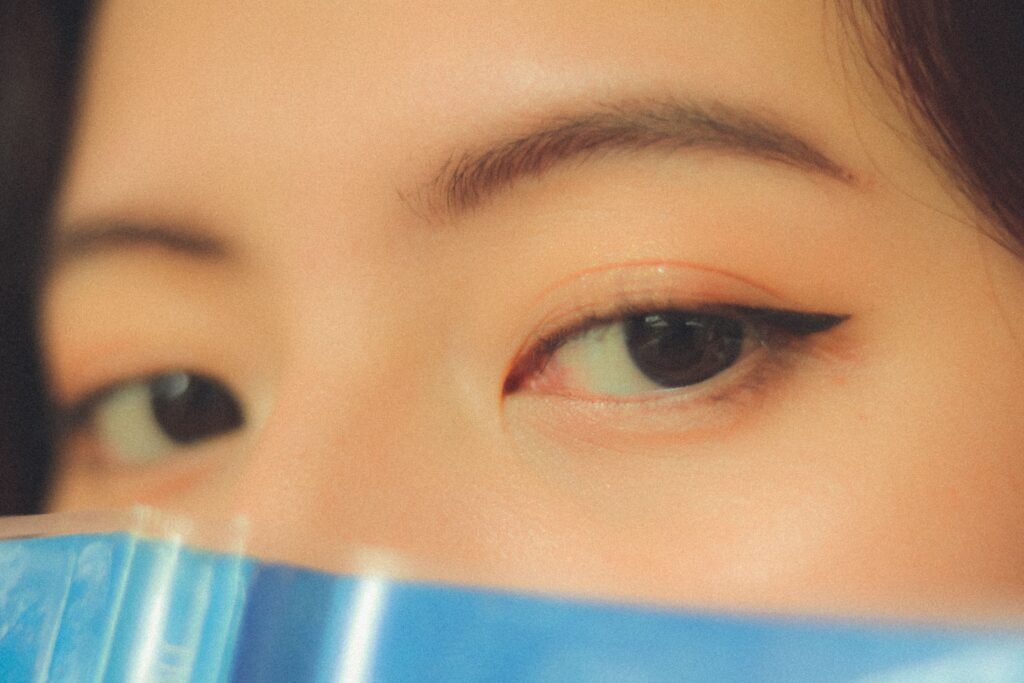
Brow Shaping 101: The Guide to Framing Your Face
No element of makeup has more influence on the overall face than the eyebrows. They set the architecture above everything else, and getting them right is less complicated than most people believe.
Why Brows Matter More Than Almost Anything Else
Research on face perception consistently finds that eyebrows are among the primary features the brain uses to read facial expression and recognise identity. A study published in Perception found that people had more difficulty recognising faces without brows than faces without eyes. They are, in a very literal sense, architecturally significant.
In makeup terms, this means that well-groomed, well-shaped brows provide a structural framework that makes the rest of the face read as more polished, even when no other makeup is worn. Conversely, brows that are over-tweezed, uneven, or poorly filled in will undermine the effect of even careful eye and base makeup.
“Studies in face perception have found that people struggle to recognise familiar faces without brows more than they do without eyes. They are not decorative; they are structural.”
The Three Points That Define Every Brow
Whatever brow shape or style you prefer, three points of placement define its structure: the start, the arch, and the tail. Getting these three points right for your face is more important than any other step.
The start of the brow should align vertically with the outer edge of the nostril. Hold a straight tool (a pencil, a brush handle) vertically against the side of the nose; where it meets the brow line is where the brow should begin. Starting too far in creates a heavy, close look; starting too far out leaves a bare gap above the inner eye.
The arch sits above the outer edge of the iris, not the pupil and not the outer corner. Hold your tool at an angle from the outer nostril through the centre of the iris and beyond; where it meets your brow line marks the arch. The tail of the brow should end at the point where a line from the outer nostril through the outer corner of the eye meets the brow line. Tails that end before this point make the face appear shorter and the eyes wider-set. Tails that extend beyond it can look artificial.
Brow Shape and Face Shape: The Relationship
Different brow shapes do different things for different face shapes. Round faces benefit from a higher, more angular arch, as it introduces angles that contrast with the face’s natural curves and create the impression of length. Square faces benefit from a softer, more curved arch that echoes roundness and reduces the severity of strong jaw angles. Heart-shaped faces suit a low, gently rounded arch that balances the width of the forehead. Oval faces, as with contouring, have the most flexibility and can carry most brow shapes well.
The key principle: if your face naturally has strong angles (square, heart), a softer brow shape balances it. If your face is naturally soft and rounded, more structure in the brow adds contrast and definition.
Filling In: Products and Technique
The two most universally effective brow products are a fine-tipped brow pencil and a powder. The pencil is used to draw individual hair-stroke strokes to fill sparse areas and define the shape. The powder is used to fill in broader areas and set the pencil strokes, giving a more natural, hair-like texture than either product alone.
Shade selection is critical. The most common error is choosing a brow product that matches the hair colour exactly. A shade one to two tones lighter than your natural hair colour is almost always more natural-looking. Very dark hair benefits from a medium-brown brow rather than a black one. Very fair hair benefits from a product one shade deeper than the hair, for definition that reads as present without looking drawn on.
Apply the pencil in short, feathery strokes in the direction of natural hair growth. Fill the tail and lower edge with the most definition, keeping the top edge softer. A spoolie brush (a clean mascara wand) blended through the brow after pencil and powder application softens everything and integrates product with real hair.
“Choose brow product one to two shades lighter than your hair colour. The goal is to enhance what is there, not to draw a brow on top of it.”
What Not to Do: The Most Common Brow Errors
Over-plucking the arch is the most consequential error. Removing too much hair from the arch area creates a flat, surprised-looking brow that is difficult to reconstruct. If you have been over-tweezing, the most effective strategy is simply to stop and allow the hair to grow back, using product to fill in in the meantime.
Drawing the brow too long in the tail, extending it further than the correct three-point calculation, is the second most common issue. It creates an artificial, heavy look and visually drags the outer eye downward. Equally, filling with a shade that is too warm-toned can create an orange cast that clashes with the skin. Most people with dark hair are better served by an ash-toned product than a warm one.
| The Three Brow Rules Worth Remembering |
|---|
| Use the three-point method (nostril to inner brow, outer iris to arch, outer corner to tail) to find your ideal shape |
| Match brow shape to face shape: soft arches for angular faces, defined arches for round faces |
| Choose product one to two shades lighter than your hair colour for a natural effect |
| Fill with short, hair-like strokes and blend with a spoolie for texture over opacity |
| Avoid over-plucking the arch, as it is the most consequential and slowest-to-reverse brow mistake |