The Undecorate Trend: Why People Are Living With Less
Forget mood boards and maximalist shelfies. A quiet rebellion against the culture of constant acquisition is reshaping how people think about their living spaces, and it turns out that stripping back is harder, and more radical, than it looks.
There is a growing number of people for whom the most radical thing they have done to their home in recent years is remove something from it. Not renovate, not redecorate, not introduce a new accent colour or swap a pendant light. Simply take something away, and not replace it.
This is the impulse behind what interior designers and cultural commentators are calling the ‘undecorate’ movement: a gathering resistance to the logic of perpetual accumulation that has dominated interior design culture since the mid-2010s, when Instagram turned the home into a permanent performance space and homeware retailers discovered that aspirational domestic aesthetics could move product at remarkable speed.
The Exhaustion of Constant Renewal
The average British household spends more on homeware and interior furnishings per capita than almost any other country in Europe, according to data from the Office for National Statistics. Much of this spending is driven not by need but by the culture of constant renewal: the awareness that trends cycle faster than ever, that a home which looked right eighteen months ago may already look subtly wrong, and that the gap between aspiration and reality can always be narrowed, temporarily, by another purchase.
The psychological toll of this cycle is becoming harder to ignore. Research by the Mental Health Foundation has found that compulsive purchasing of home goods is among the most common forms of retail therapy in the UK, providing short-term mood elevation but contributing over time to financial anxiety, physical clutter and the peculiar guilt of owning more than you need or can realistically maintain.
‘There is a very specific exhaustion that comes from managing a lot of stuff,’ says interior designer and author Jess Fearon, whose book on pared-back living has sold widely in the UK and Europe. ‘It is not just the physical management, the cleaning, the organising, the not quite knowing where things live. It is the cognitive overhead of having a home that always has more potential than it feels like it is delivering.’
“The most radical thing you can do in your home right now is nothing. Just stop. Let what you already have speak.”, Jess Fearon, interior designer
What Undecoration Actually Means
The undecorate movement is not, its proponents are at pains to emphasise, minimalism. The minimalist tradition (austere, cerebral, often expensive in its precision) has its own aesthetic demands that are no less exacting than maximalism. Undecoration is something else: less a design philosophy than a practice of subtraction, of deliberately editing rather than accumulating.
In practical terms, it tends to mean: fewer objects on surfaces. Furniture chosen for longevity and repairability rather than trend-appropriateness. A resistance to the homeware ‘drop’, the seasonal launches from retailers that create artificial cycles of obsolescence. A preference for things that have earned their place through use and meaning rather than purchased their right through novelty.
It also tends to mean living with emptiness; which is, culturally, considerably harder than it sounds. The instinct to fill a blank wall, to place something on a surface that has been cleared, to buy a plant or a candle or a print for the space that suddenly looks ‘bare’ is deeply conditioned. It is, in many ways, the defining pressure of the contemporary interior.
The Cultural Moment
Undecoration has arrived at a moment that has made its central proposition, that less is genuinely more, feel newly urgent for many people. The cost-of-living crisis has made discretionary spending on homeware a luxury that a significant proportion of the population has had to forgo. The climate emergency has made the ethics of consumption newly visible. And the post-pandemic reckoning with what actually matters in a home has shifted priorities away from appearance and toward function, comfort and psychological safety.
Social media, paradoxically, has also played a role, though in both directions. The same platforms that spent a decade promoting aspirational homeware hauls are now hosting significant communities devoted to ‘no-buy years’, decluttering documentation and the quiet pleasure of a cleared surface. On TikTok, videos tagged #undecorate and #emptywalls accumulate millions of views, with commenters expressing something that looks very much like relief.
Stripping Back Without Stripping Out
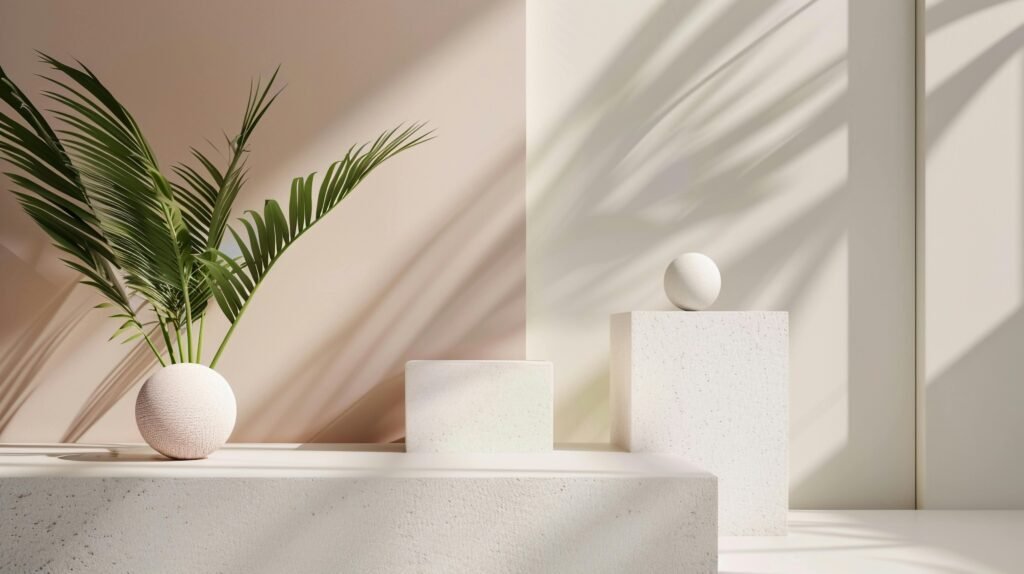
Designers working in the undecorate tradition are quick to note that paring back does not mean abandoning beauty or personality. Rather, it means changing what those things are anchored to. In an undecorated space, the quality of the light matters more. The texture of a material becomes the decoration. The scale and proportion of a room, which an excess of objects can obscure entirely, becomes visible again.
‘When you stop filling every inch of space, you start noticing what the space itself is doing,’ says architect and designer Tom Sherrat. ‘The way light moves across a wall at different times of day. The sound a room makes. The way a particular chair feels in a particular corner. These things were always there. We just couldn’t see them for everything else we’d put in front of them.’
The undecorate movement will not empty Britain’s homeware shops. But it represents something that design culture has rarely made space for: the idea that the most thoughtful response to a room is sometimes to leave it largely alone, and trust that what is already there is enough.