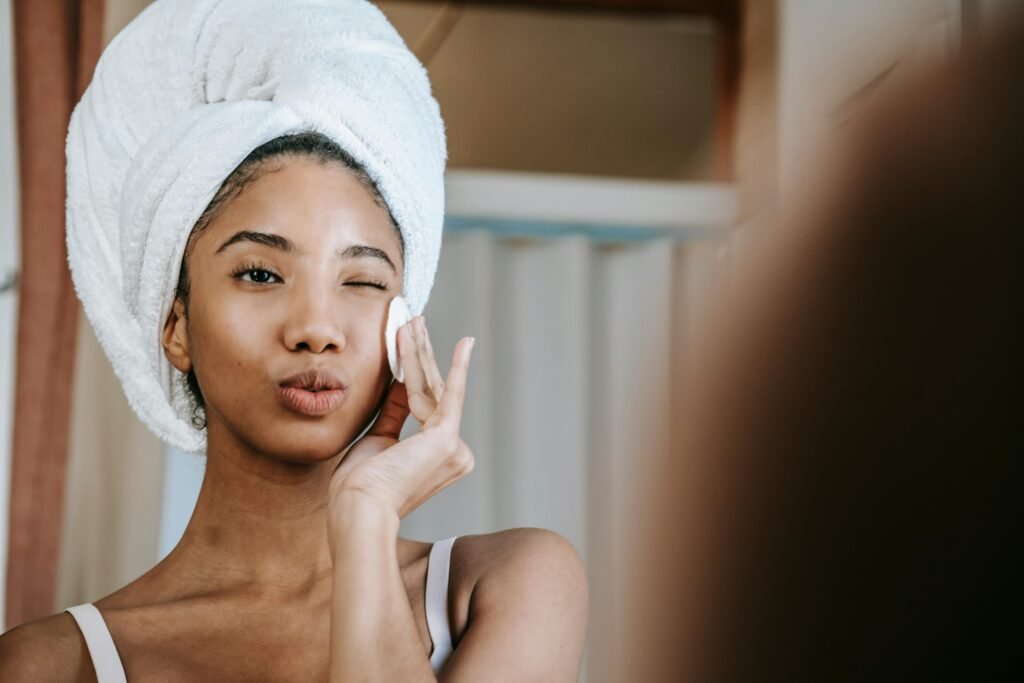
How Social Media Rewired Our Idea of Beauty
In ten years, social media did not just change where we encounter beauty standards. It changed what those standards are, who enforces them, how quickly they shift, and what happens to the millions of people caught in their wake.
The Scale of the Shift
In 2012, the average person’s exposure to beauty imagery was significant but bounded. There were magazines, television, film, billboards. The models and actors who populated these images were selected by small numbers of gatekeepers (editors, casting directors, art directors) who operated within an industry that had its own narrow conventions. What those conventions produced was, by any reckoning, a beauty standard that was unrepresentative, exclusionary and often harmful. But it was relatively static: the standard changed slowly, over seasons and years.
By 2022, the average person with a smartphone was exposed to hundreds of images of human faces and bodies every day, on Instagram, TikTok, YouTube, and the ambient social media that now constitutes so much of daily life. Many of those images had been filtered, edited, or digitally altered in ways that were not disclosed. Many showed faces that had been sculpted, at significant cost, by non-surgical cosmetic procedures (lip fillers, cheek filler, brow lifts, rhinoplasty, jawline contouring) that were presented without disclosure as natural. And the standard they collectively constructed shifted not over seasons but over months, or weeks.
This is not a marginal cultural change. It is one of the most significant shifts in how beauty standards are produced, distributed and enforced in modern history. And its effects, particularly on women and girls, are measurable.
The Instagram Face
In 2019, journalist Jia Tolentino wrote a widely read essay for The New Yorker identifying a phenomenon she called the Instagram Face: a specific, composite aesthetic that had become the dominant beauty ideal across the platform. The face was characterised by high cheekbones, a small nose, large lips, smooth skin with no visible pores, dark arched brows, and a quality of almost uncanny symmetry. It was a face that owed more to the tools of aesthetic medicine and digital editing than to natural genetic variation, and it was, Tolentino argued, converging toward a single homogenised ideal across ethnicities and backgrounds.
The phenomenon she described has been substantiated by subsequent research. Studies examining the facial characteristics most frequently presented in high-engagement beauty content on Instagram and TikTok have found significant convergence around specific proportions and features that correspond closely to the results of particular non-surgical procedures: the volumised lips of filler, the elevated brow of Botox, the smoothed skin of digital filters.
What is particularly striking is that this aesthetic ideal does not straightforwardly correspond to any ethnic or racial phenotype. It has absorbed features from multiple backgrounds (the fuller lips more common in Black and South Asian faces, the high cheekbones more prominent in East Asian faces, the symmetrical smallness of nose more achievable through rhinoplasty) and combined them into a composite that belongs to none and demands significant intervention to approximate.
“We built a beauty standard that is achievable only through expensive procedures and filters, presented it as natural, and asked millions of women to measure themselves against it daily.”
The Data on Body Image
The relationship between social media use and body dissatisfaction has been the subject of substantial academic research. The findings, across multiple studies and meta-analyses, are consistent: higher use of appearance-focused social media content is associated with lower body satisfaction, higher rates of social comparison, and increased likelihood of disordered eating behaviours, particularly in girls and women aged 13 to 30.
The most concerning data has emerged from internal research conducted by Facebook (Meta) and reported by The Wall Street Journal in 2021. Internal documents showed that the company’s own researchers had found that Instagram was harmful to the body image of a significant proportion of teenage girls, and that the company was aware of this finding but had not made it public or acted significantly on it. Among teenage girls who reported experiencing body image issues, 32% said Instagram made them feel worse.
The mechanisms are not mysterious. Social comparison is a normal human tendency, and beauty comparison is among the most automatic. When the content encountered in social comparison is algorithmically curated to show the most heavily filtered, aesthetically optimised content, and when it is encountered hundreds of times a day in an environment designed to maximise engagement, the cumulative psychological effect is measurable.
The Procedure Pipeline
The relationship between social media beauty standards and the non-surgical aesthetics industry is symbiotic and troubling. In the UK, the aesthetics industry is largely unregulated: anyone can legally administer lip fillers, cheek filler or other injectable procedures without a medical qualification. The market has grown dramatically in the past decade, estimates suggest that facial filler procedures alone increased by over 70% in the UK between 2015 and 2019.
A significant portion of that growth is driven by people seeking to approximate the looks they see on social media, often including looks they believe to be natural but that are, in fact, the product of procedures. The phenomenon of patients bringing social media images as ‘inspiration’ for cosmetic procedures is well-documented by practitioners. Some of those images are digitally filtered. Some show faces that have already undergone multiple procedures. Some are AI-generated. Practitioners report increasing difficulty in managing expectations set by images that do not represent achievable human faces.
The Representation Paradox
It would be incomplete, and inaccurate, to present social media’s effect on beauty culture as uniformly negative. The same platforms that have propagated homogenised, heavily filtered beauty ideals have also hosted some of the most significant expansions of beauty representation in media history.
The body positivity movement found its most effective platform on Instagram. Disabled creators, fat creators, creators with skin conditions, older women, visibly trans creators: demographics that had been almost entirely absent from mainstream beauty media carved out audiences of millions on social platforms and, over time, exerted genuine pressure on brands and mainstream media to broaden their representation. The diversity of faces in beauty advertising in 2024 is meaningfully different from 2014, and social media advocacy has been a significant driver of that change.
The paradox is that the same environment that enabled this expansion of representation also produced the Instagram Face: a homogenised ideal operating simultaneously with, and often drowning out, the more diverse images alongside it. The algorithm does not treat all content equally, and appearance-optimised content (smooth, filtered, conventionally beautiful by the prevailing standard) reliably generates higher engagement.
Where This Leaves Us
A decade in, the reckoning is arriving from multiple directions simultaneously. Regulatory pressure on social media platforms around beauty filter disclosure is increasing in several jurisdictions. Norway introduced legislation in 2021 requiring that retouched commercial images be labelled; the UK has debated but not yet implemented similar measures. The American Psychological Association has issued guidance on the effects of social media on adolescent mental health. Meta has introduced some measures to limit content promoting idealised body image to users under 18; the adequacy of those measures is strongly disputed.
Culturally, there are signs of a pendulum beginning to move. The ‘no filter’ aesthetic (unretouched skin, visible texture, deliberate imperfection) has developed an appreciable following as a reaction to the prevailing hyper-polished standard. Gen Z’s relationship to authenticity, however fraught and performative, has created a degree of counter-pressure to the curated-perfection aesthetic that defined the early Instagram era.
But a decade of compressed exposure to an impossible beauty standard does not undo itself quickly. The effects on body image, self-esteem, and the normalisation of surgical and non-surgical intervention in pursuit of an aesthetic that did not exist naturally are not resolved by a trend shift or a regulatory label. What is required is something more fundamental: a public conversation about what beauty standards are, how they are constructed, who benefits from their maintenance, and what the full cost of a decade of algorithmic aspiration has actually been. That conversation is overdue.